
Cash management is a fundamental aspect of both personal and business finance. It involves managing cash inflows and outflows to ensure that there is always enough liquidity to meet financial obligations.
Good cash management helps businesses avoid financial stress and invest in growth opportunities.
Research indicates that 21.6% of small and medium-sized businesses (SMBs) hold less than five months' worth of cash reserves, leaving them vulnerable to operational disruptions.
Additionally, with proper cash management, you can make sure that there is enough money available to cover day-to-day expenses, while also planning for future growth and investments.
This blog covers the basics of cash management and how it is essential to avoid shortfalls and to make informed financial decisions.
What is Cash Management?
Cash management is the process of collecting, handling, and using cash in a strategic manner. For businesses, it involves managing daily cash flows, ensuring sufficient cash available to meet operational expenses, and maximizing the use of cash for short-term and long-term needs.
For individuals, it means managing day-to-day expenses, saving for future goals, and ensuring there’s always enough money to cover unexpected costs.
Key components of cash management include:
Cash Flow: Tracking the movement of money in and out of a business or personal finances.
Forecasting: Estimating future cash requirements based on historical data and expected future events.
Budgeting: Planning how money will be spent over a given period to avoid overspending.
Liquidity Management: Ensuring you have enough liquid assets (cash or assets easily convertible into cash) to cover short-term liabilities.
Strategic cash management ensures that an individual or business can meet its obligations without running into financial trouble, while also positioning itself for growth opportunities.
Key Concepts in Cash Management
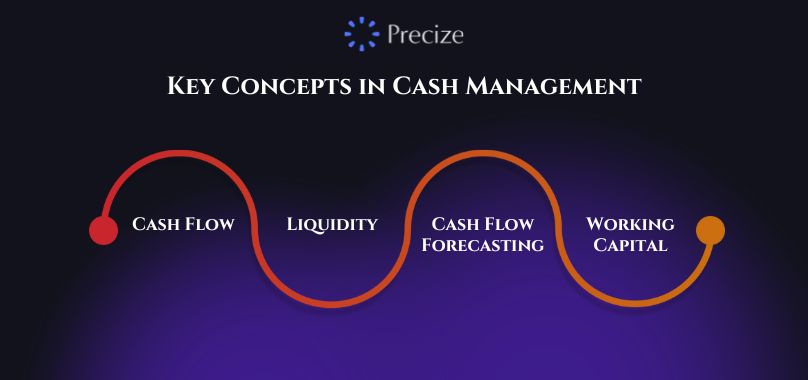
Effective cash management relies on a few key concepts that are essential to control and plan your finances:
Cash Flow: This is the movement of money in and out. Positive cash flow means more money is coming in than going out—essential for staying solvent.
Liquidity: Refers to how quickly assets can be converted to cash. High liquidity ensures you're able to meet short-term obligations without delays.
Cash Flow Forecasting: This involves predicting future cash movements based on past trends and upcoming commitments. It helps you plan ahead and avoid surprises.
Working Capital: This is the difference between current assets and current liabilities. It’s a quick way to assess your short-term financial health.
Each of these plays a role in how you monitor, plan, and control cash. Together, they give you a clear picture of where you stand and what actions you need to take.
An estimated 110,000 SMEs are at risk of closing due to a lack of cash reserves to sustain operations. Nearly 30% of business owners report having less than four months of cash remaining.
This contributes to the fact that over 45% of small businesses fail within five years. Planning out your business expenses and costing is the only way to keep your business running in the long run.
Techniques and Tools for Cash Management
Effective cash management helps you in maintaining financial stability and ensuring that you have enough liquidity to meet your obligations. Here are some key techniques and tools that can help streamline your cash management practices:
1. Cash Flow Statements
Track Inflows and Outflows: Regularly prepare a cash flow statement to monitor the cash coming in and out.
Identify Trends: Look for patterns in your cash flow to predict potential issues before they arise.
Review Monthly: Update and review the statement monthly to stay on top of your financial position.
2. Cash Forecasting
Predict Future Needs: Use historical data to predict when you'll need cash for upcoming expenses.
Use Tools or Software: Leverage forecasting tools or software that can help automate this process and make predictions more accurate.
Adjust as Needed: Update your forecasts regularly to adjust for any changes in income or expenses.
3. Bank Reconciliation
Match Records Regularly: Compare your internal records with bank statements on a monthly basis to ensure accuracy.
Identify Discrepancies: Look for errors or discrepancies in transactions and resolve them quickly to avoid future complications.
Maintain a Routine: Set a fixed schedule each month to perform bank reconciliations for consistency.
4. Cash Reserves
Set a Target Amount: Aim to build a cash reserve that covers at least 3-6 months of operating expenses.
Automate Savings: Consider setting up automatic transfers to your reserve account to ensure consistent contributions.
Reassess Periodically: Regularly review the size of your cash reserves to make sure they are sufficient for future needs.
5. Leveraging Investment Platforms like Precize
Diversify Your Investments: Use platforms like Precize to invest in unlisted shares and global trade finance, providing a way to grow your cash reserves.
Start Small: Begin with a manageable amount, such as ₹10,000, to test the platform and assess its effectiveness.
Use Research Tools: Leverage the research-driven insights and analytics offered by Precize to make informed investment decisions and optimize returns.
6. Use Cash Management Solutions
Treasury Management Systems (TMS): Integrated software platforms that help manage liquidity, forecast cash flows, and handle risk. TMS systems allow businesses to view real-time financial data, improving decision-making and forecasting.
Short-Term Investment Solutions: Banks may offer short-term investment products to help businesses optimize surplus cash, providing higher returns than keeping cash idle.
Cash Concentration: A system that consolidates funds from various bank accounts into a central account for more effective management and to reduce unnecessary fees.
For individuals, financial institutions may offer similar cash management solutions, including easy access to emergency funds, savings accounts, and investment options. These strategies help you to plan and invest your money accordingly.
Common Challenges in Cash Management
Managing cash can be challenging, and several issues often arise. Here are the common challenges in cash management:
Cash Flow Inconsistencies: Delayed payments from clients or irregular income can disrupt cash flow, making it difficult to meet financial obligations on time.
Notably, 71% of SMBs report experiencing cash shortfalls, leading many to rely on personal savings or loans to cover expenses.
Underestimating Operational Costs: Budgeting errors or unforeseen expenses can lead to cash shortages, leaving you unprepared for emergencies.
Approximately 32% of new small businesses fail within their first two years, highlighting the importance of accurate financial planning.
Overestimating Cash Reserves: Sometimes, businesses or individuals hold more cash than needed, missing out on potential investment opportunities.
Addressing these challenges requires careful planning, maintaining a healthy balance between reserves, and adjusting forecasts to secure financial stability.
Why Choose Precize Over Traditional Investment Platforms?

Precize is an alternative investment platform based in India that provides retail investors access to private market opportunities, specifically pre-IPO shares and global trade finance. Traditionally, these investment options were reserved for institutional investors, but Precize is making them more accessible.
Core Offerings
Pre-IPO Shares: Offers access to unlisted shares of companies before they go public. The investment process is simple—select the company, place an order, and receive shares in your depository account.
Private Credit: Investors can participate in global trade finance transactions, offering stable returns of 13-15% XIRR over short durations of 30-60 days.
Key Features
Low Investment Threshold: Start with as little as ₹10,000.
Research-Driven Insights: Access financial reports and industry analyses to guide your decisions.
Bank-Level Security: Your sensitive data is well-protected.
Market Updates: Stay updated with the latest on pre-IPO shares and market trends.
It helps in democratizing private market investments, providing a platform for diversifying your portfolio and exploring high-growth opportunities. Reserve access now!
How to Improve Cash Management?
To optimize your cash management, here are some key best practices:
Consistent Monitoring: Track cash flow regularly to catch any potential issues early and keep your finances in check.
Faster Payments Collection: Use systems that speed up the collection of payments, ensuring a steady inflow of cash.
Budget Review: Update your budget periodically, factoring in any new expenses or revenue changes.
Use of Low-Risk Investments: Consider diversifying your cash reserves into low-risk, liquid investments to earn passive income while keeping funds accessible.
These practices help in maintaining financial stability and avoiding unnecessary cash shortages.
Key Takeaways
Whether you're managing a business or personal finances, proper cash management is a must for financial stability. By optimizing cash flow, forecasting needs, and maintaining adequate reserves, you can avoid financial strain and always stay on track for growth.
For those looking to diversify investments, Precize offers access to pre-IPO shares and global trade finance. With a simple three-step process and research-backed insights, Precize allows investors to explore high-growth opportunities with stable returns.
Start investing with Precize today to expand your financial portfolio and make informed investment decisions.