
India’s price rise has just logged its calmest reading in nearly six years: headline inflation, measured by the All‑India Consumer Price Index, eased to 3.16 percent in April 2025, down 18 basis points from March and the lowest year‑on‑year rate since July 2019.
With prices easing, it’s the right moment to recap the essentials.
In this blog, you will begin by understanding what inflation means and why it is happening. Next, you will learn about the different types of inflation. After that, we will explore the practical measures to control inflation. Finally, you will explore the real challenges in controlling inflation.
So, let’s get started!
What is Inflation?
Inflation is the general rise in prices of goods and services over time, which means your money doesn’t buy as much as it used to. Like, when inflation is high, everyday things like food, fuel, and clothing become more expensive.
For you and many people in India, this affects your cost of living and how far your income stretches. Inflation is usually measured by indexes such as the Consumer Price Index (CPI) or Wholesale Price Index (WPI), which track price changes in a basket of common goods.
Now that you get what inflation is, let’s look at the key factors that lead to it.
Why Does Inflation Happen?
Inflation in India rarely comes from just one source. You’ll usually see a mix of factors working together:
Too Much Money in Circulation: When the central bank prints more money or banks hand out loans easily, more rupees chase the same amount of goods. That extra money in the system pushes prices upward.
Expecting Prices to Rise: Sometimes inflation starts in people’s minds. If businesses expect higher costs and workers expect bigger paycheques, they raise prices and wages now, setting off a self‑fulfilling spiral.
Heavy Government Spending: When government outlays grow faster than the country’s output, more money floods the market without more goods to buy. The result is price inflation.
Costlier Imports: A jump in world oil prices or a weaker rupee makes imported items costlier. Those higher import bills trickle down to you in the form of steeper prices at home.
With the reasons for inflation clear, it’s important to know the types of inflation that can affect your daily life.
Common Types of Inflation
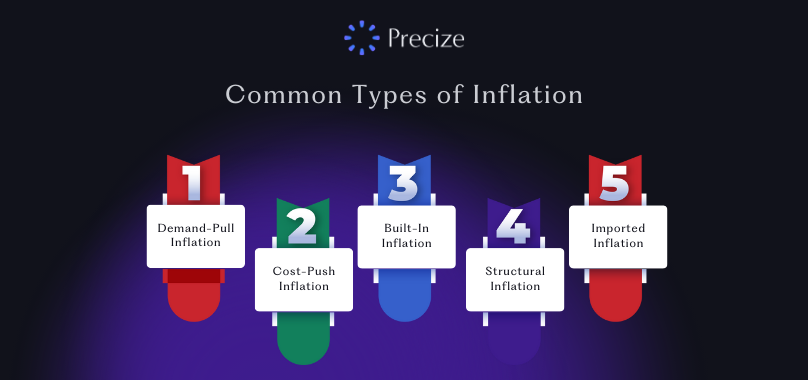
Inflation doesn’t always happen for the same reasons or in the same way. Here are the main types you should understand:
Demand-Pull Inflation
This happens when you and many others want to buy more goods and services than what is available. When the economy grows and people have more money to spend, prices rise because supply can’t keep up with demand.
Cost-Push Inflation
This type occurs when the cost of producing goods increases, like when raw materials or wages go up. Companies then raise prices to cover these higher costs, which affects what you pay.
Built-In Inflation
Also called wage-price inflation, this happens when workers ask for higher wages to keep up with rising living costs. Businesses increase their prices to cover these higher wages, which can create a cycle of rising prices and wages that impact you.
Structural Inflation
This happens because of changes in the economy’s structure, such as shifts in what consumers like you prefer or new technologies. Supply chain problems or delays in some industries can also cause this kind of inflation.
Imported Inflation
When the prices of goods that India imports, such as fuel, raw materials, or technology, go up, it makes the products you buy more expensive. Since India depends on imports, this can push up inflation at home.
With the types of inflation clear, it’s important to know what strategies are used to keep inflation in check.
Measures & Strategies to Control Inflation
When inflation rises, it can affect your daily life by increasing prices of goods and services. To keep inflation in check, India uses several important measures and strategies that help control price growth and maintain economic stability.
Monetary Policy Adjustments
The Reserve Bank of India uses monetary policy tools to control inflation by managing the money supply and borrowing costs.
The RBI changes the repo rate, which is the interest rate for lending money to banks. When inflation rises, the RBI increases the repo rate to make borrowing costlier. This reduces loans to people and businesses, lowering spending and easing inflation.
RBI also adjusts the Cash Reserve Ratio (CRR) and Statutory Liquidity Ratio (SLR), requiring banks to hold a certain percentage of deposits as reserves. Higher CRR and SLR mean banks have less money to lend, which reduces spending and inflation.
Open Market Operations (OMO)
RBI controls liquidity in the economy by buying or selling government securities.
When inflation is high, the RBI sells government bonds, which takes money out of circulation and reduces the total money supply. This helps lower demand and inflation.
Conversely, if inflation is low, the RBI can buy bonds to add money into the system, supporting growth.
Inflation Targeting
India follows a clear inflation target to keep prices stable and predictable.
Since 2016, the RBI has aimed to keep inflation at 4%, with an allowed range between 2% and 6%.
The Monetary Policy Committee (MPC) meets regularly to monitor inflation and decide on policy actions to stay within this target, helping maintain price stability.
Fiscal Policy Measures
The government uses its budget to influence inflation by managing spending and taxes.
When inflation rises, the government may reduce its spending or increase taxes to lower demand.
Lower spending or higher taxes mean less money in the economy, reducing people’s buying power and slowing price increases.
Strengthening Supply Chains
Improving supply chains helps prevent shortages that can cause prices to rise.
The government works on better transportation, storage, and distribution of essential goods like food items.
Efficient supply chains ensure that goods reach markets on time and in sufficient quantities, stabilizing prices and reducing inflation pressure.
Promoting Competition and Preventing Hoarding
To stop unfair price rises, the government promotes competition and prevents hoarding.
Laws against monopolies and hoarding stop businesses from creating artificial shortages or raising prices unfairly.
When businesses compete fairly, prices stay reasonable, helping control inflation.
Subsidies and Price Controls
The government provides financial support and controls prices on essential items to protect consumers.
Subsidies reduce the cost of goods like LPG cylinders and food grains, making them affordable.
Price controls set limits on how much sellers can charge, preventing sudden price spikes during inflation.
Exchange Rate Management
Managing the rupee’s value helps control inflation caused by costly imports.
If the rupee weakens, imported goods such as oil become more expensive, pushing up prices domestically.
RBI may intervene to stabilize the rupee, keeping import costs lower and controlling inflation from this source.
Encouraging Savings
Increasing savings in the economy helps reduce inflation by lowering spending.
When you save more, less money is used for buying goods and services, which lowers demand and prices.
Banks and the government encourage savings by offering attractive interest rates on deposits.
Currency Measures
Sometimes, the government uses currency-related actions to reduce excess money in the system.
Measures like demonetisation remove certain currency notes, reducing unaccounted money that can drive inflation.
By limiting excess cash flow, these steps help bring inflation under control.
While these measures help control inflation, you should also understand the challenges that can make managing inflation difficult.
Constraints in Controlling Inflation
When you think about controlling inflation in India, you’ll see there are many real challenges that make it hard for the government and the Reserve Bank of India (RBI) to keep prices steady. Here are the main obstacles you should understand:
Supply Problems
Unpredictable events like a bad monsoon, floods, or drought can reduce the supply of essential items, especially food, pushing prices higher, no matter what policies are in place.
Also, global issues like trade conflicts or political tensions can disrupt supply chains and increase the cost of imports, adding to inflation.
Food Price Changes
In India, inflation often rises because of big price jumps in a few key food items like vegetables and pulses.
Even if other prices are stable, these sudden increases can make overall inflation go up quickly.
The government tries to control this by releasing stored supplies or adjusting imports, but these steps don’t always stop prices from rising fast.
Global Economic Impact
Changes in world prices for things like crude oil and other commodities directly affect inflation in India. Currency changes can also make imports more expensive, which adds to inflation pressures in the country.
Limits of Monetary Policy
The RBI can increase interest rates or change reserve requirements to control inflation, but these tools take time to work and may slow economic growth.
Also, if inflation is caused by a shortage of goods rather than too much demand, monetary policy alone won’t be very effective.
Challenges with Fiscal Policy
The government can reduce its spending or increase taxes to lower demand and control inflation, but these moves can be unpopular and might affect important development and welfare programs.
It’s tough to manage government finances well during times of slow growth or when there’s high public need.
Structural Problems
Weaknesses in transport, storage, and delivery systems can create fake shortages and cause prices to rise, especially for perishable goods. In some areas, lack of competition lets companies keep prices high even when enough goods are available.
Political and Social Pressure
Some steps to control inflation, like cutting subsidies or raising taxes, may face strong opposition from people or political groups. Governments sometimes delay making tough decisions to avoid backlash, especially near elections.
Delayed Effects
Most policies, whether monetary or fiscal, don’t bring immediate results. There is usually a delay between when a policy is put in place and when you see its impact, meaning inflation can stay high for some time.
Problems with Data and Monitoring
Having accurate and up-to-date information is very important to control inflation well. If data collection is slow or inaccurate, it makes it harder for policymakers to respond quickly and effectively.
Conclusion
Controlling inflation effectively requires a balanced approach that combines both monetary and fiscal policies. When the Reserve Bank of India and the government work together using the right measures to control inflation, they can manage price rises while supporting steady economic growth.
It’s also important to keep a close watch on the economy and adjust policies as needed because inflation causes can change over time. Staying flexible and responsive helps keep prices stable and protects your daily expenses.
Platforms like Precize offer access to private equity and private credit opportunities, providing options to diversify your portfolio. Consider reserving access to explore these alternatives and strengthen your financial planning.
Disclaimer
The information provided in this blog is for general understanding and educational purposes only. It does not constitute financial, investment, or professional advice. While efforts have been made to ensure the accuracy of the content, readers should consult with qualified professionals before making any financial or investment decisions. The author and publisher are not responsible for any losses or damages arising from the use of this information.