For many Indian businesses, especially small and medium enterprises, expanding into global markets often comes with financial hurdles, limited working capital, delayed payments, and cross-border risks. Trade finance is helping bridge this gap by making international transactions more manageable. India’s trade finance market is expected to grow from USD 2.72 billion in 2025 to around USD 3.88 billion by 2030, with a steady annual growth rate of 7.39%, according to Mordor Intelligence.
In this blog, we’ll look at how India's trade finance is supporting businesses in reaching international markets. We will cover what trade finance is, its key benefits for Indian businesses, the role of digital platforms and fintech, current challenges in the sector, strategies to make better use of trade finance, and the future outlook of India’s trade finance landscape.
So, let's get started to learn!
TL;DR
Trade finance helps Indian businesses manage global trade by offering funding, reducing risks, and supporting faster transactions.
Digital platforms and fintech are making trade finance quicker, paperless, and more accessible, especially for MSMEs.
Key challenges include high collateral demands, complex regulations, currency risks, and limited use of digital tools.
Strategies like using letters of credit, supply chain finance, and government-backed schemes can improve access and growth.
Sectors like textiles, pharma, engineering, and IT benefit most, and even small businesses can now access tailored trade finance solutions.
What is Trade Finance?
Trade finance refers to the financial tools and services that help businesses carry out international trade smoothly. When you export or import goods, there’s often a time gap between shipment and payment. Trade finance bridges this gap by providing working capital, reducing payment risk, and making sure both buyers and sellers feel secure. It includes services like letters of credit, export credit, invoice financing, trade credit insurance, and bank guarantees.
Understanding the basics is just the start, here’s how trade finance plays out step by step in real trade transactions.
How Trade Finance Works (with Examples)
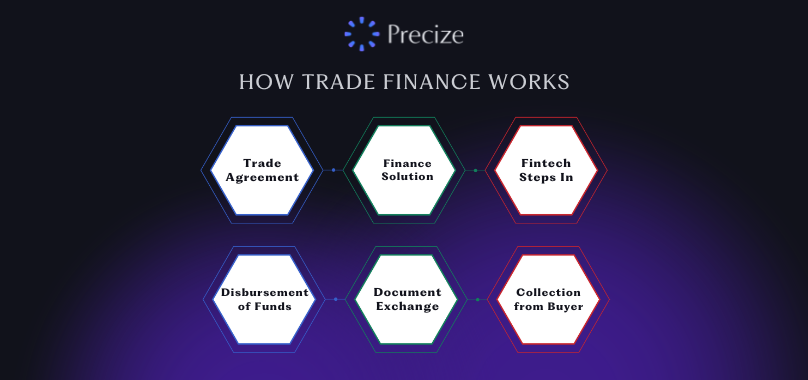
Trade finance might sound complex, but it actually follows a simple step-by-step process that supports your global trade journey.
Step 1: Buyer and Seller Sign a Trade Agreement
You and your overseas buyer agree on trade terms, product details, delivery timeline, payment method, and documentation needed.
Step 2: Choosing a Trade Finance Solution
Depending on your need (payment assurance, working capital, or risk cover), you pick a trade finance option like a letter of credit, invoice discounting, or export credit.
Step 3: Bank or Fintech Steps In
You approach a bank, NBFC, or fintech platform that offers trade finance. They assess your documents, trade contract, and buyer profile.
Step 4: Issuance of Guarantee or Disbursement of Funds
If you’re exporting, you might get up to 80–90% of your invoice amount in advance through export factoring.
If you’re importing, your bank may issue a letter of credit to guarantee payment to your seller.
Step 5: Shipment and Document Exchange
You ship the goods and share all necessary shipping documents (like bill of lading, invoice, packing list). These are verified before the final payment is made.
Step 6: Repayment or Collection from Buyer
For exporters: Once the buyer pays, the bank settles the remaining balance with you.
For importers: You pay back the financer within the agreed period.
Example 1: A Mumbai-based apparel exporter uses invoice discounting to receive early funds while waiting for a 60-day overseas payment.
Example 2: A Delhi electronics importer uses a letter of credit to assure a Chinese supplier of timely payment and get goods released faster.
With a clear picture of how trade finance operates, it’s easier to understand why more Indian companies are using it to grow globally.
Key Benefits of Trade Finance for Indian Businesses
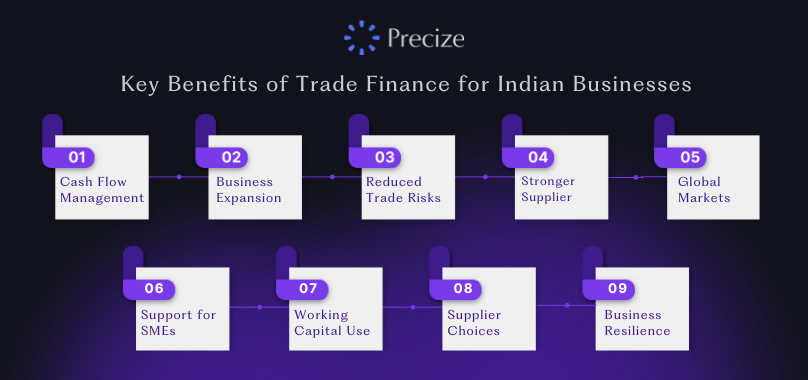
Trade finance brings several real-world advantages that help Indian companies manage global trade more confidently and efficiently. Here’s how it supports your business:
Stronger Cash Flow Management
Trade finance lets you pay your suppliers before receiving payment from your buyers. This means you don’t have to wait for money to come in, you can take on more orders and keep your business running smoothly.
Faster Business Expansion
It frees up money stuck in your inventory or unpaid invoices. With this extra funding, you can expand your operations, increase trade volumes, and grab new business opportunities both in India and abroad.
Reduced Trade Risks
Trade finance protects your business from common problems like late payments, customer defaults, or political issues in export markets. Tools like letters of credit and trade credit insurance help make transactions safer.
Stronger Supplier and Customer Ties
When you’re able to pay your suppliers on time and offer flexible payment terms to buyers, it builds trust on both ends. This can lead to better pricing, discounts, and a more reliable supply chain overall.
Easier Entry into Global Markets
Trade finance gives you the financial backing and peace of mind needed to enter new markets, manage cross-border transactions, and fulfill large export orders with confidence.
Inclusive Support for SMEs
Many trade finance options don’t rely solely on your credit history or large assets. That means even if you’re a smaller business, you can still access funding and grow without major collateral.
Smarter Working Capital Use
With flexible financing based on your trade cycle, you can manage your day-to-day cash needs better and avoid delays in business operations.
Wider Supplier Choices
With the support of trade finance, you can source from a broader range of suppliers across different countries, helping you improve costs and efficiency.
Greater Business Resilience
Trade finance also acts as a safety net, helping you manage unexpected delays, policy changes, or market shifts by giving you the financial flexibility to adapt and continue.
But how are these benefits delivered in practice? The answer lies in the tools businesses use every day.
Unlock Global Growth with India Trade Finance
Explore how India's trade finance solutions are helping businesses scale globally. Get the resources you need to expand and succeed on the international stage.

Common Trade Finance Tools
Trade finance tools play a key role in helping Indian businesses manage payments, reduce risks, and maintain smooth international operations. Here are some of the most widely used tools in India’s trade ecosystem:
Letter of Credit (LC)
A Letter of Credit is issued by the buyer’s bank and guarantees that the seller will receive payment once the terms of the agreement are fulfilled. It builds trust in cross-border transactions.
Bill of Exchange
This is a written instruction from the seller to the buyer to make payment on a specific date. It can also be discounted at a bank to receive early funds before the due date.
Bank Guarantee
In case the buyer defaults on a payment or contract, a bank guarantee ensures that the bank covers the agreed amount. It’s commonly used in high-value import-export deals.
Trade Credit Insurance
This protects exporters from the risk of non-payment due to buyer insolvency or political disruptions. It helps businesses trade confidently with overseas buyers.
Invoice Financing
If you're waiting for customers to pay but need cash now, invoice financing helps you borrow money against unpaid invoices. It improves working capital without waiting for long credit cycles.
Export and Import Factoring
Factoring lets you sell your export or import receivables to a third party (a factor) for immediate cash. The factor collects the payment later, helping you avoid delays.
Supply Chain Finance
Supply Chain Finance, or reverse factoring, is when buyers help suppliers get paid early through third-party financing. It strengthens the relationship and improves liquidity for both.
Pre-shipment and Post-shipment Finance
These are loans given before or after goods are shipped. Pre-shipment finance covers raw materials and production, while post-shipment finance bridges the gap until payment arrives.
Forfaiting
Forfaiting is used in medium-to long-term exports. You sell your receivables (often backed by promissory notes) to a forfaiter and receive 100% cash upfront, without recourse.
While these tools form the foundation of trade finance, digital platforms and fintech are now changing how businesses access and manage them.
Role of Digital Platforms and Fintech in Trade Finance
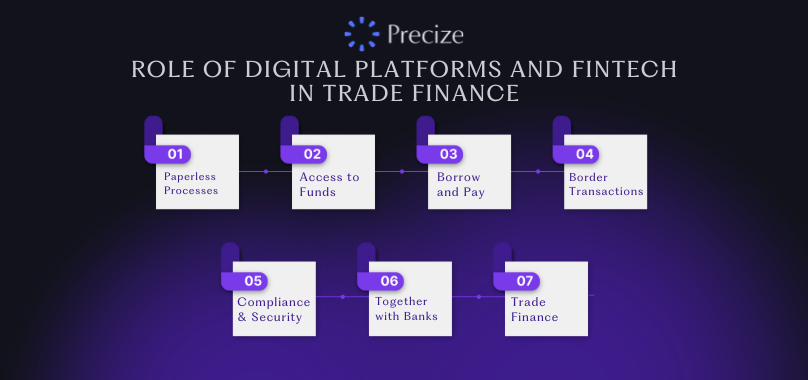
Digital platforms and fintech companies are changing how trade finance works in India. They are removing old hurdles and making financial services quicker, easier, and more accessible, especially for businesses that want to grow globally. Here’s how they are helping:
Faster and Paperless Processes
Digital trade finance platforms cut down paperwork and automate steps like loan applications, document checks, and fund transfers.
What used to take weeks now takes just a few hours, helping you grab new global opportunities without delay.
Easier Access to Funds
Fintech companies are making it easier for small and mid-sized businesses to get funding, even in remote areas.
They use tools like AI and data analysis to check creditworthiness, allowing more businesses to qualify for loans, even those that may not meet traditional bank rules.
New Ways to Borrow and Pay
Many platforms now offer flexible options like invoice financing, supply chain finance, and peer-to-peer lending.
These tools help improve your cash flow, provide quick working capital, and make it easier to handle international payments.
Smooth Cross-Border Transactions
Digital platforms simplify global payments, reduce costs, and allow you to track payments in real-time.
With technologies like blockchain, UPI, and secure APIs, your international deals become faster, safer, and more transparent.
Better Compliance and Security
These platforms also help you follow rules like KYC and anti-money laundering without extra manual work. Digital records keep everything clear and easy to track, which builds trust in global trade.
Working Together with Banks
Many Indian banks now partner with fintech firms, combining traditional trust with modern tech.
This helps you get solutions that match your business needs, whether you’re a small exporter or a growing manufacturer.
Future Trend of Trade Finance
A major push is coming from legal frameworks like the Electronic Trade Documents Act (ETDA), which now gives digital trade documents the same legal status as paper ones. This opens the door for faster, more secure, and more transparent trade transactions.
As per projections by the International Chamber of Commerce, the global trade finance market could grow by 3.8% annually, reaching nearly £91 billion by 2032.
Much of this growth will be powered by digital platforms that simplify document handling, reduce manual errors, and speed up cross-border transactions.
Despite these advancements, trade finance in India continues to face some long-standing issues.
Challenges in India’s Trade Finance Sector
When you're aiming to grow your business globally, the challenges in India’s trade finance system can directly affect how far and how fast you can scale. Here are the key issues you should know about, and how they impact your trade journey:
Shortage of Export Credit
Currently, only around 28.5% of India’s export finance needs are met through formal sources. This leaves a large funding gap, making it hard for businesses like yours to accept bigger export orders or expand confidently.
Heavy Collateral Demands
Many banks and lenders ask for high-value collateral, which puts small and mid-sized businesses at a disadvantage. Even though MSMEs contribute nearly 40% of India’s exports, many are still left out of formal financing because of these strict requirements.
Complicated Regulations
Exporting from India involves dealing with complex rules, like GST, licensing, and quality checks. For smaller businesses, staying on top of changing policies and paperwork can be time-consuming and stressful, often affecting long-term planning.
High Cost and Limited Access to Credit
Export financing in India can be expensive, with interest rates often going above 12%. This makes it tough to offer competitive pricing in global markets, especially if you're a smaller business with fewer financial options.
Low Use of Advanced Financial Tools
Solutions like factoring, post-shipment finance, and forfaiting aren’t widely used, especially by MSMEs. These tools could help improve cash flow, but they remain limited mostly to large companies.
Regulatory Restrictions
RBI rules currently give benefits only to banks using government-backed insurance (like ECGC), excluding private insurers. This limits credit options and slows down the flow of trade finance.
Lack of Digital Adoption
Many businesses still don’t fully use digital platforms like TReDS for invoice financing. Also, India’s legal system doesn’t yet recognize electronic trade documents, which delays the move to a fully paperless trade process.
Currency Fluctuations
The Indian rupee often sees sharp ups and downs, which makes it harder to price exports and protect profit margins. Hedging options are available, but they’re costly and not easily accessible for most exporters.
Tech Gaps in the System
A lot of businesses still don’t have access to modern trade tech, and the trade finance ecosystem in India is fragmented. This leads to inefficiencies, higher costs, and delays compared to global standards.
Global Competition and Policy Changes
New tariffs, tighter quality rules, and shifting trade policies in other countries can create uncertainty. At the same time, strong competition from nations like China, Vietnam, and Bangladesh makes it harder to stay ahead in global markets.
Despite these issues, there are proven methods that can help businesses tap into trade finance more effectively.
Strategies for Businesses to Maximize Trade Finance
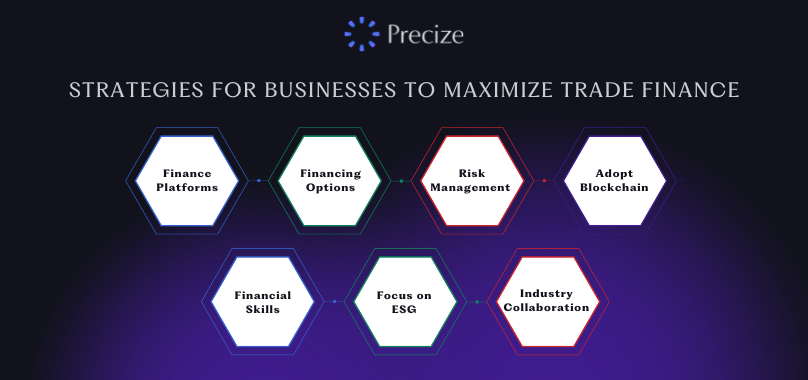
As your business looks to expand globally, India’s trade finance ecosystem is offering smarter, more targeted solutions, especially for MSMEs and growing exporters. Here are some practical strategies you can use to make the most of trade finance:
Use Digital Trade Finance Platforms
Platforms like Bharat Trade Net (BTN) and TReDS help simplify invoicing, document submission, and payments.
These digital tools speed up your transactions, reduce costs, minimize errors, and cut down on paperwork, making cross-border trade more efficient and manageable.
Explore Flexible Financing Options
Look for financing solutions that are designed with fewer collateral requirements, especially if you're an MSME.
Alongside traditional export credit, explore modern options like factoring, supply chain finance, and non-recourse financing.
Many of these are now available through partnerships between banks and fintech companies.
Also, take advantage of government-backed programs such as the expanded Production Linked Incentive (PLI) schemes and export-oriented finance initiatives that support growing exporters.
Use Risk Management Tools
To protect your business from payment delays or defaults, use credit insurance and risk protection funds.
With tools powered by AI and analytics, you can better assess partner credibility and identify potential risks before they impact your business.
You can also consider both private and public insurance options, including coverage from ECGC, to safeguard your foreign receivables and lower your exposure to international trade risks.
Adopt Blockchain and Emerging Fintech Solutions
Blockchain technology brings transparency and security to your trade transactions.
It creates tamper-proof digital records and smart contracts that speed up payments and support regulatory compliance.
Working with fintech firms also gives you access to AI-powered onboarding, automated paperwork, and real-time updates, making your international transactions smoother and faster.
Build Financial Skills and Awareness
Improve your team’s understanding of trade finance by joining training programs and credit awareness sessions offered by banks and government agencies.
Learning about financing options, compliance, and best practices helps you avoid costly mistakes and make better decisions.
Keep track of new trade finance rules, digital tools, and global trends so your business stays compliant and competitive.
Focus on ESG and Sustainable Practices
Including Environmental, Social, and Governance (ESG) practices in your business can give you an advantage.
Many banks and global trade partners now prefer working with companies that follow sustainable practices, which may help you access better trade finance opportunities.
Strengthen Industry Collaboration
Work closely with banks, fintech companies, export councils, and government bodies. Stronger coordination across customs, logistics, financial institutions, and regulators helps streamline your operations and reduce delays in international trade.
Unlock Exclusive Private Equity Opportunities
Explore unique investment options in unlisted shares and global trade finance. Start diversifying your portfolio with Precize today.
Conclusion
India’s trade finance landscape is no longer limited to just traditional banking routes. As you've seen throughout this blog, Indian businesses are now using smarter strategies, digital platforms, and sector-specific solutions to overcome trade barriers and scale across global markets. From invoice discounting to supply chain finance, these tools are helping companies, big and small, move faster and safer in the export-import space.
In line with this progress, Precize is helping unlock new opportunities. It facilitates investments in leading private companies, enabling seamless access to unlisted and pre-IPO shares. Alongside this, Precize also brings you global trade finance opportunities that add alternative fixed-income investments to your portfolio, beyond the usual market options.
Reserve access now to explore a diversified portfolio with exclusive trade finance and private equity opportunities through Precize!
Frequently Asked Questions (FAQs)
1. What are the main strategies Indian businesses use in trade finance?
Indian businesses often use letters of credit to ensure secure payments, export credit to get advance funding, and invoice discounting to free up cash from unpaid bills. Many also use supply chain finance to support every step of their trade operations.
2. What trade finance solutions are available in India?
Banks, NBFCs, fintechs, and institutions like Exim Bank offer a range of trade finance services, including pre-shipment and post-shipment credit, export factoring, performance guarantees, and digital platforms that speed up and simplify transactions.
3. How is technology changing trade finance in India?
Technology is making trade finance faster and easier. Tools like blockchain, digital portals, and paperless systems allow quicker applications, real-time tracking, and better access, especially for small businesses.
4. Which industries in India benefit most from trade finance?
Export-focused industries like textiles, pharmaceuticals, engineering, gems and jewelry, agriculture, and IT services use trade finance heavily to grow and manage their international business.
5. Can small businesses in India also access trade finance?
Yes, MSMEs can access trade finance through tailored products offered by banks and fintechs. These solutions often have lower paperwork, faster processing, and are designed to meet the needs of small export-import businesses.
Disclaimer
The information provided in this blog is for general knowledge and educational purposes only. It does not constitute financial, investment, or legal advice. Readers are advised to do their own research and consult with certified professionals before making any financial decisions. Precize does not guarantee returns or performance of any investment options mentioned. All investments are subject to market risks.