
A diversified portfolio is an investment strategy aimed at reducing risk by spreading investments across a variety of asset classes or securities. The core idea behind diversification is that different asset classes often tend to perform differently under various market conditions. By incorporating a mix of investments, the overall portfolio can potentially minimize the negative impact of any single asset or sector's poor performance.
The logic behind diversification is to reduce risk by avoiding over-concentration in one area. For example, if you invest solely in airline stocks and there's a global economic recession leading to a decline in air travel demand, your entire portfolio could suffer significant losses. However, by diversifying into assets that behave differently, such as bonds or stocks from various industries, you can protect yourself from significant losses.
To illustrate this with a simple example, consider a portfolio with two assets that are negatively correlated. This means that when one asset performs well, the other tends to perform poorly, and vice versa. For instance, if one asset is in the technology sector and the other is in the energy sector, they might react differently to market changes. When technology stocks rise, energy stocks might fall, and when energy stocks rise, technology stocks might fall. By holding both assets, the negative performance of one can offset the positive performance of the other, potentially leading to a more stable overall return for the portfolio.
What’s the Logic behind diversification?
Diversification helps manage two main types of risk: unsystematic and systematic.
Unsystematic risk is tied to a particular asset or sector. It can be reduced by mixing assets that don't move in the same direction. Issues like changes in interest rates or problems in a specific industry can affect particular investments. By combining assets that behave differently, you can lessen the impact of these risks.
Systematic risk, on the other hand, affects all types of investments. This includes broader issues like political instability or economic downturns that hit every asset class. Regardless of how diversified your portfolio is, systematic risk remains.
How to diversify your portfolio?
Here’s a simple way to reduce risk in your portfolio:
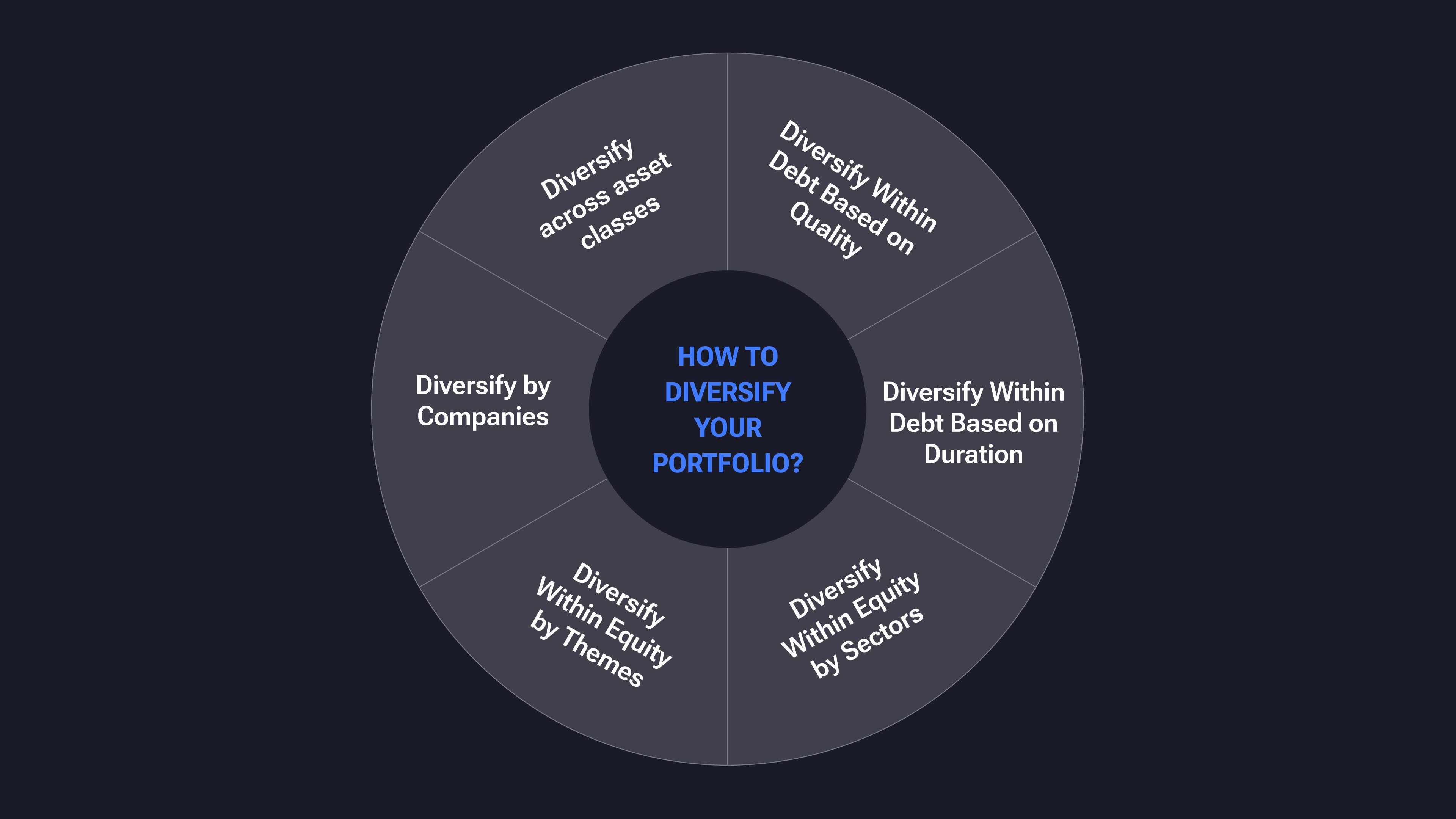
Diversify across asset classes
Begin by diversifying your investments across various types of assets. This includes stocks, bonds, hybrid funds, private equity or unlisted shares, private credit, ETFs, index funds, gold, real estate, and international assets. Spreading your investments across these different categories can help reduce overall risk. The initial step in diversification is deciding which asset classes to include in your portfolio. These asset classes may include government-backed securities, fixed-income investments, listed shares, and many more.
Diversify Within Debt Based on Quality
Quality of Debt: Start by investing in different types of debt, such as government bonds and corporate bonds. Decide how much to put into very safe government securities versus state government bonds. Then, within corporate debt, decide how much to invest in high-quality bonds (like AAA-rated) versus slightly lower-quality bonds (like AA-rated). Generally, avoid going below AA-rated bonds, as they carry higher default risks.
Diversify Within Debt Based on Duration
Duration of Debt: Split your debt investments based on how long the bonds will be held. For example, you can allocate some money to short-term debt (less than 5 years) and some to long-term debt (more than 5 years). Your choice will depend on your views about interest rates. Long-term bonds are more affected by changes in interest rates, so you should adjust your portfolio on the basis of whether you expect rates to rise or fall.
Diversify Within Equity by Sectors
Equity Sectors: Invest in different industry sectors, such as healthcare, consumer goods, and many more. Each sector reacts differently to economic changes. For instance, construction-related sectors like cement and steel do well when construction activity increases, while financial stocks benefit when interest rates drop. By investing in various sectors, you can spread your risk.
Diversify Within Equity by Themes
Investment Themes: Themes are broad trends that can cover multiple sectors. For example, an interest rate-sensitive theme includes sectors like banking and real estate, which do well when rates fall. Another theme might be rural demand, benefiting companies in agriculture and rural products. Make sure not to overinvest in any one theme to maintain balance.
Diversify by Companies
Different Companies: Within each sector or theme, invest in a mix of companies. For example, combine companies with high profit margins with those that efficiently use their assets. Also, mix growth stocks (which may offer higher future returns) with dividend-paying stocks (which provide regular income). This combination can help with overall positive performance.
In conclusion:
Diversification is an investment strategy that manages risk by allocating investments across various assets, sectors, themes, and companies. It’s a basic yet effective way to start building a resilient portfolio.
*Disclaimer: This information is for private use only and does not constitute investment advice. Recipients must assess risks and seek advice from financial, legal, and tax professionals. Private market investments carry risks, and there are no guarantees of returns or capital protection. We are not liable for investment decisions.