
Have you ever thought about exploring investment opportunities outside the usual stocks and bonds? Something that offers higher returns, diversification, or a hedge against inflation? Alternative investments might be exactly what you're looking for. With more people seeking ways to grow their wealth, these investment options are gaining popularity in India. Whether you're interested in real estate, venture capital, or even cryptocurrency, alternative investments present exciting opportunities.
In this blog, we’ll dive into the top alternative investment options in India for 2025. From high-growth private equity investments to stable gold investments, you’ll discover a variety of options and why they might be worth considering for your portfolio. Let’s explore how you can make your money work harder!
Key Takeaways:
Alternative Investments offer higher returns, diversification, and a hedge against inflation, making them attractive options outside traditional stocks and bonds.
Top 10 Investment Options include AIFs, private equity, venture capital, real estate, P2P lending, gold, cryptocurrencies, structured products, commodities, and art investments.
AIFs are pooled investment vehicles offering high returns and diversification, with three categories targeting different risk profiles (Category I, II, III).
Risks include market, liquidity, regulatory, valuation, and concentration risk. Understanding these is crucial before diving into alternative investments.
What Are Alternative Investment Options?
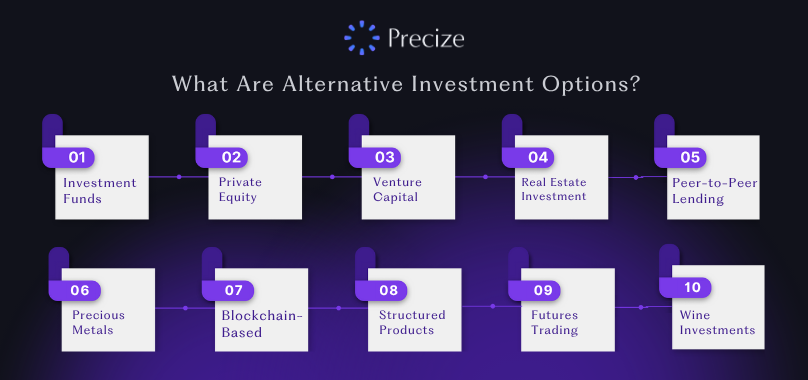
Alternative investment options refer to financial assets or strategies that fall outside traditional investment categories like stocks, bonds, or cash. These investments typically include non-traditional assets such as real estate, private equity, venture capital, commodities, and more. In India, the rise of alternative investments is driven by the need for higher returns and more diversified portfolios. While they come with their own set of risks, these alternatives often offer greater growth potential and less correlation to traditional markets.
Now that we’ve explored what alternative investments are, let’s take a look at the Top 10 Alternative Investment Options for 2025 in India.
1. Alternative Investment Funds (AIFs)
Alternative Investment Funds (AIFs) are pooled investment vehicles that collect capital from investors to invest in assets outside traditional stocks and bonds. They are designed to offer high returns and diversify risk.
AIFs are categorized into three types:
Category I AIFs: These include funds that invest in start-ups, social ventures, or other ventures that are beneficial to the economy. They are usually considered low-risk.
Category II AIFs: These funds invest in private equity, debt, and other instruments, and have a more balanced risk-return profile.
Category III AIFs: These funds invest in hedge funds or other speculative strategies, which can offer high returns but come with significant risks.
Benefits and Strategies:
AIFs provide investors with access to diverse asset classes like real estate, hedge funds, or private equity. They also offer professional management, strategic investments, and greater flexibility.
AIFs are perfect for investors looking to diversify into high-growth sectors with a managed risk approach.
2. Private Equity (PE) Investments
Private Equity (PE) investments involve investing in private companies that are not publicly listed. These investments typically offer significant returns by investing in emerging or established private firms.
Private Equity enables investors to provide capital to growing companies in exchange for equity stakes. It plays an important role in helping companies expand, restructure, or go public through an IPO.
Key Benefits:
High Returns: PE investments often provide high returns, particularly in the growth or expansion phase.
Diversification: As PE firms operate in various industries, they allow for greater diversification.
Access to High-Growth Companies: Investors gain access to companies with high potential before they go public.
How to Get Involved:
Investors can access PE through funds or by directly buying shares of private companies. Platforms like Precize make it easy for retail investors to tap into these opportunities.
Private equity investments offer a high-growth path for investors willing to accept higher risks.
3. Venture Capital (VC)
Venture Capital (VC) is a form of private equity where investors provide funding to early-stage startups in exchange for equity or debt.
While PE typically targets more established companies, VC focuses on early-stage companies with high growth potential. VCs take higher risks in exchange for potentially higher rewards.
Key Benefits:
High Returns from Startups: Investing in startups can yield substantial returns once the company matures or goes public.
Industry Innovation: VC enables funding for breakthrough technologies and services, providing investors with access to innovative sectors.
Diversification: Through VC investments, you can diversify into niche sectors like technology, healthcare, and green energy.
Risks and Rewards:
Venture capital comes with risks, including high failure rates among startups. However, successful ventures can provide outsized returns, particularly if they go public or get acquired.
Venture capital offers exciting opportunities for investors willing to take risks on the next big tech unicorns.
4. Real Estate Investment
Real estate has long been a favored asset class in India, providing both capital appreciation and steady rental income. With the increasing demand for both residential and commercial properties, real estate investment continues to remain a lucrative option.
Real estate investments include buying residential or commercial properties directly, as well as investing through Real Estate Investment Trusts (REITs).
Types of Real Estate Investment:
Residential Properties: Investing in houses or apartments.
Commercial Properties: Office spaces, retail spaces, and industrial properties.
REITs: A less capital-intensive option for investing in real estate assets.
Market Trends in India:
The Indian real estate sector has experienced consistent growth over the years, especially in urban centers. With government support for affordable housing and rising demand for commercial spaces, real estate remains a valuable asset.
Risks:
Real estate investments are less liquid and can be influenced by economic conditions, interest rates, and location-specific factors.
Real estate remains a stable and profitable asset class, but it does come with risks.
5. Peer-to-Peer (P2P) Lending
P2P lending connects borrowers directly with individual investors, bypassing traditional financial institutions like banks.
P2P lending platforms act as intermediaries, allowing investors to lend money to borrowers for personal or business purposes in exchange for a return on their investment.
Benefits:
High Returns: P2P lending offers attractive returns compared to traditional savings accounts.
Diversification: P2P lending lets you diversify your investment across a range of loans.
Democratized Access: Small investors can participate in lending to borrowers who may not be able to access loans from banks.
Risks:
P2P lending comes with the risk of default. Proper credit assessments are necessary to reduce the risk of lending to non-creditworthy individuals.
P2P lending provides high returns but involves some risk due to the possibility of default.
6. Gold and Precious Metals
Gold has always been seen as a safe haven investment, especially in uncertain economic times. Over the years, gold and other precious metals have proven to be reliable long-term investments.
Market Outlook:
Gold prices have surged due to inflationary pressures and economic instability. Precious metals like silver, platinum, and palladium also offer diversification in this sector.
Benefits:
Inflation Hedge: Gold acts as a hedge against inflation and currency devaluation.
Diversification: Gold and silver add diversification to a portfolio, especially when stock markets are volatile.
Liquidity: Physical gold, gold ETFs, and sovereign bonds offer liquidity when needed.
Gold and precious metals continue to be a safe, valuable investment, especially during times of economic uncertainty.
7. Cryptocurrencies and Blockchain-Based Investments
Cryptocurrencies have transformed the financial sector, offering new ways for investors to diversify their portfolios.
Cryptocurrencies like Bitcoin, Ethereum, and newer altcoins operate on blockchain technology, providing decentralized and secure transactions without traditional financial intermediaries.
Legal and Regulatory Challenges:
India’s regulatory stance on cryptocurrencies is still evolving, but investors are closely watching how these digital assets are treated by Indian law.
Benefits:
High Returns: Cryptos have the potential for rapid growth, especially for early investors.
Decentralized and Secure: Blockchain technology ensures transparency and security.
Hedge Against Traditional Markets: Cryptos provide a hedge against traditional financial systems.
Risks:
Cryptos are highly volatile and speculative. Regulatory uncertainty in India remains a challenge.
Cryptocurrencies offer exciting returns but come with significant risks.
8. Structured Products
Structured products are customized financial instruments designed to meet the specific needs of investors.
What Are Structured Products?
These products are typically tied to the performance of an underlying asset, like stocks, indices, or commodities.
Benefits:
Customization: These products can be tailored to suit an investor’s risk profile.
Capital Protection: Some structured products offer principal protection, reducing downside risk.
Risks:
Complexity: Structured products can be difficult to understand and assess.
Limited Liquidity: Some structured products are illiquid, meaning they can't be easily sold.
Structured products can provide flexibility but require a solid understanding of the product before investing.
9. Commodities and Futures Trading
Commodities are physical assets that are bought and sold in markets, and futures trading involves contracts that require the buyer to purchase an asset at a predetermined price at a future date.
Types of Commodities:
Energy Commodities: Oil, gas, and other energy sources.
Agricultural Commodities: Grains, livestock, and more.
Risks:
Commodity prices are volatile, driven by supply and demand, geopolitics, and environmental factors.
Commodities can be a lucrative investment but come with significant volatility.
10. Art, Collectibles, and Wine Investments
Investing in art, wine, and collectibles has become increasingly popular as more people look to diversify their portfolios with alternative, tangible assets.
Market Trends in India:
The art market in India has seen significant growth, and collectibles like rare wines and vintage items also provide high returns.
Risks:
Valuation Issues: Art and collectibles can be difficult to value.
Illiquidity: Selling tangible assets may take longer compared to stocks or bonds.
Art, collectibles, and wine are non-traditional investments but come with challenges.
Also Read: Modern Investment Options and Strategies for your Portfolio
Let’s now understand why Alternative Investment is so important?
Importance of Alternative Investment
Alternative investments provide access to unique opportunities that offer high potential returns, reduced correlation with traditional asset classes, and a cushion against market volatility. For investors looking to diversify their portfolios and protect themselves from economic uncertainty, alternative assets have become an important part of their strategy.
Key Benefits of Alternative Investments:
1. Diversification Benefits
They enhance portfolio resilience and reduce risk through diversification, making your investments more stable during market fluctuations.
2. Low Correlation with Traditional Assets
Since alternative investments don’t always move in sync with traditional markets, they help to reduce overall portfolio volatility.
3. Risk Management
With a variety of risk-return profiles, these assets offer better risk management options, especially during market downturns.
4. Potential for Higher Returns
Some alternatives like private equity and venture capital can offer higher long-term returns than conventional investments.
5. Inflation Hedge
Real estate, commodities, and other tangible assets can help preserve purchasing power during inflationary periods.
6. Opportunities in Niche Markets
Alternative investments allow you to access specific industries and opportunities that are unavailable in traditional markets.
7. Long-Term Capital Appreciation
Assets such as private equity and venture capital typically focus on generating long-term growth, making them great options for sustained wealth building.
8. Diversification within Alternatives
Different categories within alternative investments, like real estate types or different sectors in private equity, further enhance risk mitigation.
9. Enhanced Portfolio Efficiency
Balancing risk and return is key. Alternative investments can help you achieve more return for the same level of risk or reduce risk while still reaching your return targets.
Alternative investments are increasingly important for building a balanced and resilient portfolio. By including them, you can reduce risks and enhance long-term returns, especially in a volatile market.
Let's explore why more and more Indians are looking towards alternative assets as an integral part of their investment strategy.
Why Are Indians Investing in Alternative Assets?
In recent years, Indian investors have increasingly turned to alternative assets, such as AIFs, REITs, and P2Ps, as part of their investment strategy. While traditional markets like equities and fixed deposits continue to be popular, there’s been a shift towards diversifying portfolios through newer asset classes that offer better returns with relatively manageable risks. This change is driven by a combination of factors, from inflation concerns to the desire for diversification.
Reasons Behind the Rise of Alternative Investments in India:
1. Diversification
Investors in India have realized that putting all their assets in mutual funds, equities, or fixed deposits isn’t enough. These traditional investments come with their own set of risks and rewards, but many investors want to diversify their portfolios to ensure more stable returns.
2. Inflation-Adjusted Returns
Fixed deposits, once a staple for Indian investors, no longer offer returns that beat inflation. As a result, many are looking at alternative investments that can yield higher returns with similar or even lower risk.
3. Regulated and Unregulated Avenues
With SEBI taking active steps to regulate alternative investment avenues like REITs, InvITs, and corporate bonds, investors now have better confidence in these platforms. The demand for these investment opportunities has surged, with many NFOs oversubscribed and AUMs soaring.
4. Market Resilience
Corporate bonds, asset leasing, and invoice discounting aren’t correlated with traditional markets, meaning they provide a buffer during market downturns, allowing investors to weather volatility more easily.
5. Rise of Fixed Income Alternatives
Many Indians are increasingly exploring fixed-income alternatives like P2P lending, corporate bonds, and structured finance, seeking better returns than traditional FDs but at a controlled level of risk.
6. Improved Financial Literacy
More investors are now educated about the potential of alternative investments, leading to greater exploration of these opportunities as an essential part of portfolio diversification.
Indians are embracing alternative investments as a way to balance risk and return, creating more resilient portfolios. These asset classes provide the growth potential that traditional investments may no longer offer, making them a smart choice in 2025 and beyond.
Let’s now address the Risks and Considerations associated with alternative investments.
Risks and Considerations
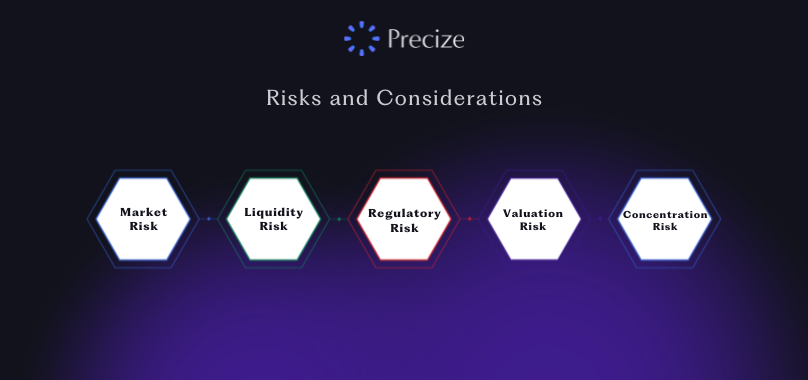
While alternative investments can provide great returns and diversification, they come with inherent risks. It's important to understand these risks before making any investment decisions.
1. Market Risk
Market risk refers to the potential for changes in overall market conditions that can negatively affect your investment. Alternative assets like commodities, real estate, and cryptocurrencies can be more volatile than traditional investments, with values fluctuating due to economic trends, supply and demand, or geopolitical factors.
2. Liquidity Risk
Liquidity risk is the challenge of selling certain investments quickly. Real estate, private equity, and unlisted shares may not be easily liquidated, which means you could face delays in accessing your funds if needed, especially in tough market conditions.
3. Regulatory Risk
Regulatory risk involves changes in government policies, laws, or regulations that can impact the value or viability of alternative investments. Whether it’s changes in tax laws or new restrictions, regulatory shifts can significantly affect your returns, particularly in high-risk sectors like cryptocurrency or P2P lending.
4. Valuation Risk
Valuation risk occurs when it's difficult to accurately assess the value of an investment. Assets like unlisted shares or collectibles may not have readily available market prices, leading to discrepancies in perceived value versus actual sale price.
5. Concentration Risk
Concentration risk arises from investing heavily in one sector or asset. A downturn in that sector or asset could lead to large losses. Diversifying within your alternative investment portfolio is essential to reducing this risk.
Understanding the risks, such as market, liquidity, regulatory, valuation, and concentration risk, can help you make more informed decisions about alternative investments.
Final Thoughts
Alternative investments provide a unique way to diversify your portfolio and pursue higher returns. By considering options like AIFs, private equity, venture capital, and real estate, investors can access opportunities outside traditional markets. However, it’s important to understand the risks involved and consult with financial experts before making any decisions.
If you're looking to explore alternative investments with ease, Precize offers a seamless platform to manage your investments and access exclusive opportunities.
Sign up with Precize today and start building a diversified and robust investment portfolio!
Frequently Asked Questions (FAQs)
1. What is the best asset class to invest in for 2025 in India?
In 2025, a diverse approach to investing is recommended, with particular attention to alternative assets like Real Estate, Private Equity, Venture Capital, and Commodities. These options tend to offer higher growth potential and diversification compared to traditional stocks and bonds, making them attractive for investors seeking better returns.
2. Which are the top Alternative Investment Funds (AIFs) in India for 2025?
Some of the top AIF funds in India for 2025 include:
Edelweiss Private Equity Fund
Axis Private Equity Fund
Kotak AIF
IDFC AIF
Blackstone India AIF
These funds provide a mix of private equity, debt, and venture capital investments, allowing investors to diversify their portfolios across high-growth sectors.
3. Which investments are expected to perform well in India in 2025?
In 2025, sectors like technology, green energy, fintech, real estate, and cryptocurrencies are likely to see strong performance. Investments in Private Equity (PE), Alternative Investment Funds (AIFs), and Venture Capital (VC) will continue to grow as these sectors expand. Gold and real estate are also expected to remain reliable options in uncertain economic climates.
4. Can you explain the 7-5-3-1 rule in Systematic Investment Plans (SIP)?:
The 7-5-3-1 rule is a simple guide for SIP investments, aimed at maximizing long-term growth:
7: The number of years you should aim to invest for higher returns.
5: The percentage of your income to invest in SIPs.
3: The ideal number of SIPs to invest in across different mutual funds or asset classes.
1: The target amount you want to achieve in return on investment.
This rule helps to balance investment risk and growth while maintaining diversification.
5. Is investing in AIFs a better option compared to mutual funds?
Alternative Investment Funds (AIFs) offer higher returns and greater flexibility compared to mutual funds, especially in private equity and venture capital.
AIFs are typically more suitable for high-net-worth individuals (HNWIs) or sophisticated investors due to their higher risk and longer investment horizon.
Mutual funds, on the other hand, are more accessible, with lower risk and liquidity, making them ideal for retail investors. The choice depends on your risk appetite and investment goals.
Disclaimer
The content in this blog is for informational purposes only and does not constitute financial advice. Alternative investments come with inherent risks, and investors are advised to consult a financial expert before making any decisions.