
Corporate actions play a pivotal role in the dynamic world of finance. These initiatives, undertaken by corporations, result in changes in the company's stock. Comprehending different corporate actions is crucial for investors as it offers valuable insights into a company's financial well-being and assists in making informed investment choices. In this blog post, we'll delve into corporate actions, exploring how they influence stock prices and benefit companies.
The Power of Corporate Restructuring
Corporate restructuring is a strategic move by a corporation to alter its capital structure or operations. In simple terms, it involves deciding between debt-financed capital and equity-financed capital. One of the significant corporate actions in this category is a Follow-on Public Offer (FPO). Let's take a closer look at the implications of corporate restructuring.
FPOs are a means for companies to raise capital by issuing additional shares to the public. This can help a company reduce its debt burden, strengthen its balance sheet, and fund new projects. It's a strategic move that can boost the company's financial health, making it an attractive proposition for investors.
Influence on Unlisted Share Prices
The price of unlisted shares can have a substantial impact on market participation and stock liquidity. If an unlisted share is priced too high, it may deter investors due to affordability concerns. On the other hand, unlisted shares priced too low may raise doubts about its investment potential. Corporate actions, including stock splits, reverse stock splits, and buybacks, have the potential to exert a significant impact on stock prices.
Stock Splits: A stock split involves dividing each existing share into multiple new shares. This lowers the share price, making it more accessible to a broader range of investors. Stock splits often result in increased liquidity and can attract a more diverse investor base.
Reverse Stock Splits: Conversely, a reverse stock split combines multiple existing shares into one share, increasing the share price. This move is usually intended to meet minimum price requirements or enhance the company's image. It can have mixed effects on investors.
Buybacks: Unlisted Share buybacks occur when a company repurchases its shares from the market. This can boost the share price, signaling confidence in the company's prospects.
Distributing Profits to Unlisted Shareholders
Corporate actions can also serve as a means to distribute profits to unlisted shareholders. This can be a rewarding incentive for investors. Two everyday corporate actions in this category are Bonus Issues and Dividends.
Bonus Issue: A bonus issue involves issuing additional unlisted shares to existing shareholders based on their current holdings. It's a way for companies to reward shareholders and enhance the value of their investments.
Dividends: Dividends are payments made to unlisted shareholders from the company's profits. They offer investors a regular income stream and reflect the company's financial health and performance.
Exploring Different Types of Corporate Actions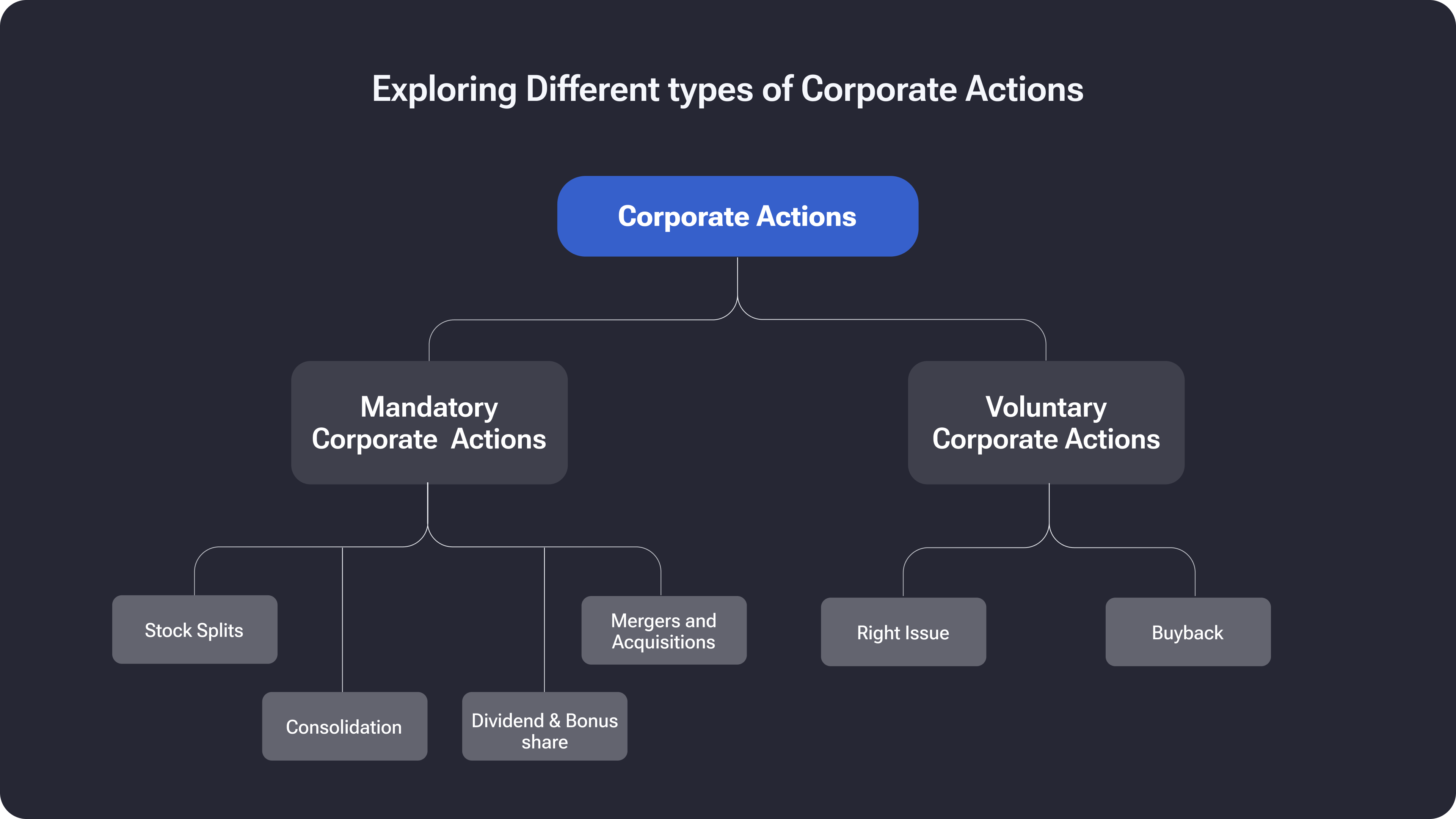
Corporate actions come in various forms, each with its unique impact on the company and its shareholders.
They fall into two main categories: mandatory and voluntary corporate actions.
Mandatory Corporate Actions:
Stock Splits: As discussed earlier, stock splits involve dividing existing unlisted shares into multiple new shares to lower the share price.
Consolidation: Consolidation is the opposite of stock splits, where multiple existing unlisted shares are combined into one share, increasing the unlisted share price.
Dividend and Bonus Share: Dividends are periodic payments made to shareholders, while bonus shares are additional shares issued to existing shareholders based on their current holdings.
Mergers and Acquisitions: Mergers and acquisitions are corporate actions that involve the consolidation of two companies or the acquisition of one company by another.
Voluntary Corporate Actions
Right Issue: A right issue allows existing shareholders to purchase additional unlisted shares at a discounted price.
Buyback: Unlisted Share buybacks occur when a company repurchases its shares from the market, often to enhance shareholder value.
Conclusion
Corporate actions are a fundamental aspect of the financial landscape, influencing stock prices and providing opportunities for investors. They allow companies to optimize their capital structure, affect stock liquidity, and distribute profits to shareholders. Understanding the different types of corporate actions is vital for investors looking to make informed decisions in the ever-evolving world of finance. So, the next time you hear about a corporate action, you'll have a clearer picture of its significance and potential impact on your investments.